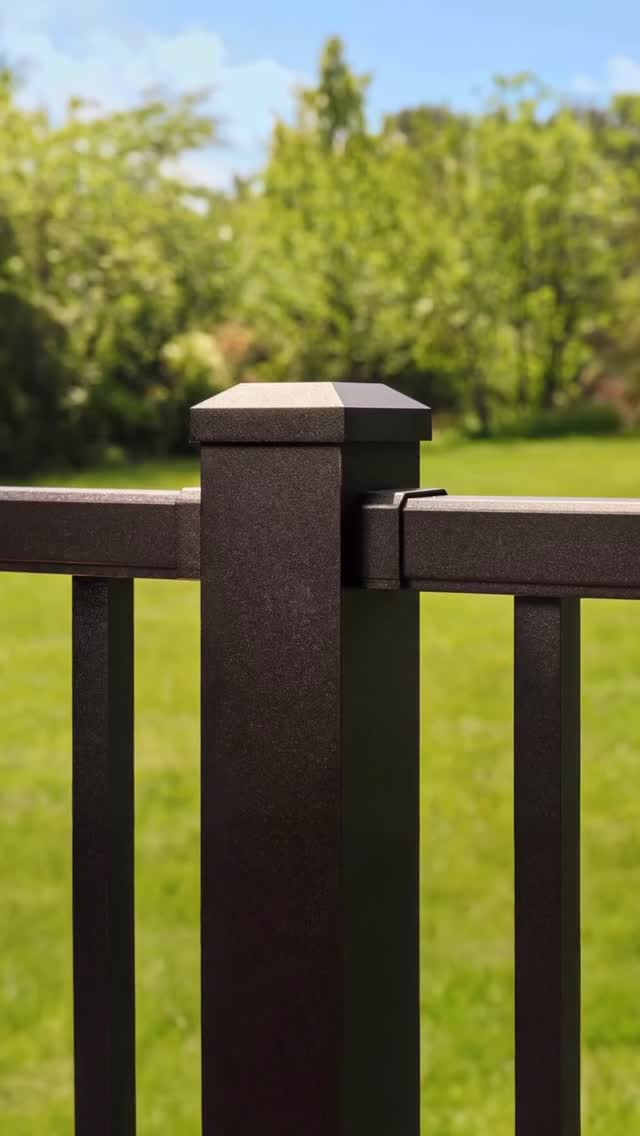
Most deck inspections happen in the spring, empty, before the furniture comes out. That is the wrong test. A deck does not fail when it is empty — it fails in July, with fourteen people, a full cooler, and two kids treating the railing like playground equipment. So the safety check I run in June is an in-use check: the deck loaded the way it will actually be loaded, while I push, bounce, and pry on the parts that carry people. Here is the whole routine. It takes about twenty minutes, and you can run most of it yourself this weekend.
The railing push test
Stand at the middle of the longest guard run, grip the top rail with both hands, and push — hard, the way a big person leaning back against it would. Then pull. A sound guard moves very little: the posts are bolted to the framing, not screwed to the deck boards, and the whole run feels like one piece of the structure.
What you are feeling for:
- Flex that travels — the rail moves and the movement runs down the whole section. That is posts fastened into decking or a rim board only, and it is the most common serious defect I find. A guard attached that way can pull out under a real load, and guards are the difference between a stumble and a fall of several feet.
- Movement at one post — that post's bolts are loose, its blocking is gone, or its base is rotting where water sits against it.
- Spindles or balusters that spin or pop — a child-sized gap waiting to happen. Spacing has to stay under 4 inches; a baluster that can be wiggled out has already failed.
The fix depends on the cause: through-bolts and blocking to tie posts into the joists is an afternoon for most decks. Posts rotted at the base means replacing posts — and asking why water was sitting there.
The stair bounce
Walk down the middle of the stairs slowly, then with a deliberate bounce on each tread. Stairs should feel like the house — dead solid. A springy stair usually means a cracked or undersized stringer, and the place to look is underneath: stringers split along the grain at the notches, and the split is always worst at the bottom tread. Check the handrail the same way as the guard — stairs are where people actually grab — and check that the stair-to-deck connection has not opened a gap you can slide a pencil into.
Boards that talk back
Walk the whole surface slowly in socks or bare feet. You are feeling for:
- Popped fasteners — screw and nail heads standing proud of the boards. They cut feet, and they mean the board is moving.
- Soft spots — a board that gives with a dull, spongy feel is rotting from the top face down, usually where water sat under a planter, a mat, or the grill.
- Cups and splits at the seams — boards that have cupped hold water instead of shedding it, which shortens their own life and everything under them.
One or two bad boards is a repair — boards are replaceable individually, and it is normal wear on a wood deck in this climate. Soft spots everywhere, or framing soft underneath when you check from below, is a different conversation: that is structure, and it moves the job from handyman territory to a rebuild conversation.
The ledger: the connection that matters most
If your deck is attached to the house, it hangs off a ledger board bolted to the house framing. More deck collapses trace to ledger failure than to any other single cause — the connection rots, or was never flashed, or was fastened with nails and hope. From underneath, look for staining and soft wood at the house line, flashing that is missing or buried behind siding wrong, and fasteners that are not bolts or structural screws. You cannot grade the bolts from outside, but rot and missing flashing you can see, and either one earns a professional look before the Canada Day crowd arrives.
What the fixes take, roughly
Loose guards re-bolted to framing: hours. A run of bad boards: a day. A cracked stringer: a day or two with the stair rebuilt properly. Ledger rot: the serious one — it can mean opening the connection, replacing rotted framing in the house wall, re-flashing, and re-hanging the deck, and it is worth every penny because it is the joint that holds the deck to the house your family sleeps in.
Run the push test and the bounce test this weekend. If everything feels like the house, enjoy your summer. If something moves that should not, get it looked at before it is loaded with people you like. Book a free estimate at calendly.com/conceptsinc/construction-estimate-service or call (705) 330-2911 — a deck safety check is a small job, and June is exactly when it should happen.