People planning a home addition ask me two sets of questions. The first set is about the build — cost, permits, timelines. The second set, usually quieter, is about survival: what is it actually like to live in the house while this is happening? Fair question. An addition is the least disruptive big renovation there is — the work happens mostly outside your walls until the very end — but it is not no disruption. Here is the honest week by week, from excavation to the day the wall between old and new comes down.
Weeks 1–2: Excavation and foundation — the loud, muddy opening
This is the heaviest footprint of the whole job. An excavator in the yard, trucks coming and going, a hole where part of your lawn used to be. Expect:
- Noise and vibration during working hours — digging, then forming and pouring the foundation. Your pictures will not fall off the walls, but a nap in the room nearest the dig is not happening.
- A yard that looks worse than it is. Excavated soil has to sit somewhere until backfill. We keep the site fenced and tidy, but there is no version of a foundation hole that photographs well.
- Your house stays whole. This is the addition advantage: your kitchen, bathrooms, and bedrooms are untouched. The new structure rises beside the house, sealed off from it.
Then the quiet part: concrete needs time, and the foundation inspection has to happen before backfill. There may be days in this stretch where nothing visible changes. That is not the job stalling — that is curing and inspection, and skipping either costs more than waiting.
Weeks 3–5: Framing and roof — the fast, satisfying middle
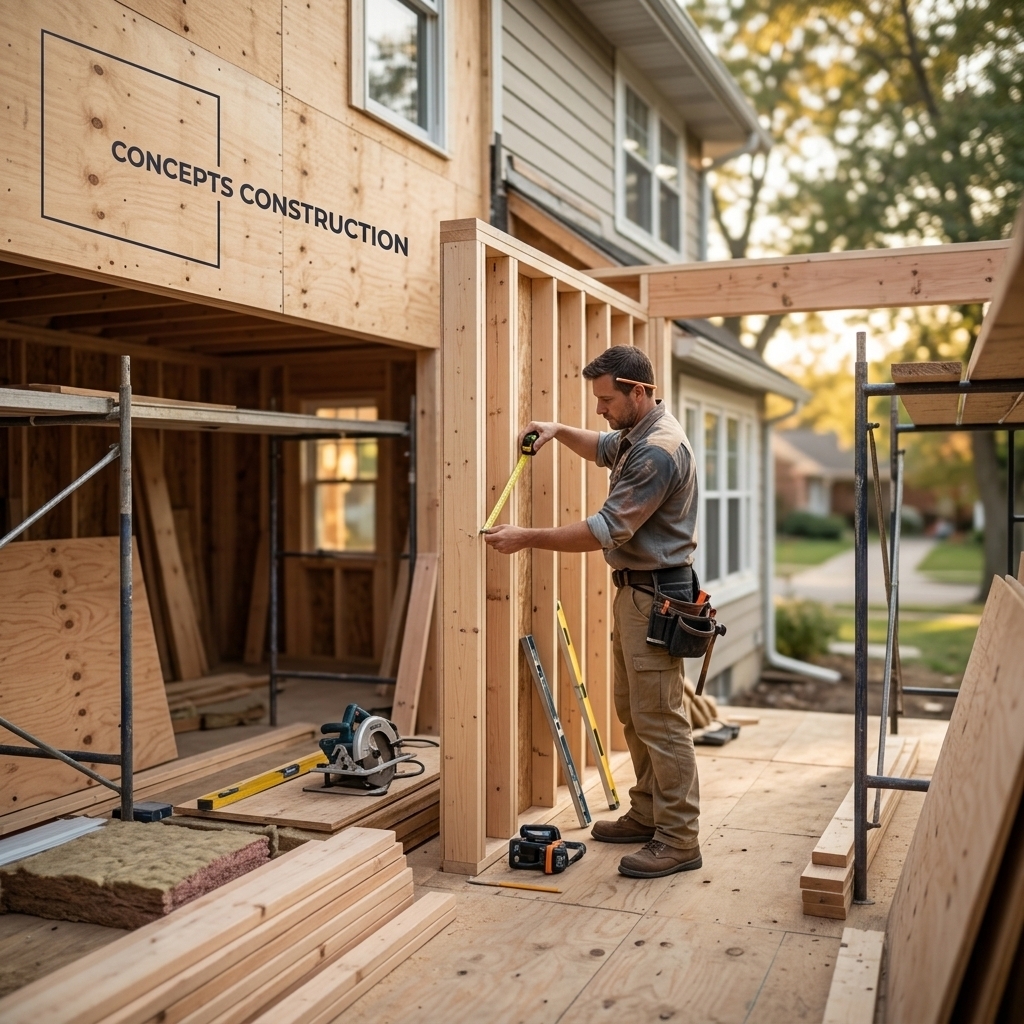
Framing is the part homeowners photograph. The addition goes from a hole to a shape in days: floor, walls, roof structure, sheathing. Then roofing and windows, and the new space is what builders call dried-in — weather-tight, lockable, and starting to feel like a room instead of a project.
Noise is nail guns and saws, steady through the day. Dust is still mostly outside. This is usually when families relax: the thing has a roof, the weather cannot hurt it, and you can stand inside the new space and pace out the furniture.
Weeks 6–8: Rough-ins — the quiet weeks
Plumbing, electrical, and heating runs go into the open walls, then the rough-in inspections. From the street, almost nothing changes for two or three weeks, which makes this the stretch where homeowners most often ask if something is wrong. Nothing is wrong. The work is inside the new walls, it is detailed, and it is the stage that decides how the finished space performs — where the heat runs land, whether the outlets are where your life actually needs them, whether the bathroom drains sing or gurgle. Walk the space with your contractor during rough-in, before insulation. It is the last cheap moment to move a light switch.
Weeks 9–10: Insulation, drywall — and the wall comes down
Insulation, inspection, then drywall. Drywall is the dust week — fine, white, and determined. And this is the stage where the addition finally opens into the house: the section of exterior wall between old and new comes out, the beam or header that carries the load goes in (it was planned and permitted long before), and for the first time you walk from your kitchen into the new space without going outside.
Plan for this week. The opening is typically a day or two of real disruption in the existing house — noise, dust migration despite the plastic and the sealing, a room out of service. Families who schedule a couple of nights away, or just plan around it, sail through. Families who are surprised by it do not.
Weeks 11–12: Finishes — the long tail
Trim, flooring tied into the existing, paint, fixtures, final inspections. Finishing feels slower than framing because it is a dozen small trades of detail instead of one big shape — and because you are almost, almost living in it. This is also where a good crew earns the one-year workmanship warranty we put on the work: the details are the job now.
How families actually cope — the honest list
- Set the bathroom and kitchen expectation early. On an addition, both usually keep working the whole job — that is the whole point of building outward. Confirm it with your contractor anyway.
- Dust discipline is real but bounded. We seal openings, run the work from outside as long as possible, and clean as we go. Your house will still know a renovation happened. Budget one deep clean at the end and do not fight the small stuff daily.
- Kids and dogs need a plan for the yard. The site is fenced and the gate rule is absolute, but the backyard is a construction zone for the duration — shift the play space for the summer.
- Working hours are working hours. Expect the crew roughly within the site's stated hours, and quiet evenings and Sundays. If your household sleeps days or has a newborn, say so before the schedule is set, not after.
- The neighbours. Tell them before the excavator does. A two-minute conversation in May buys a summer of goodwill.
An addition is a season of manageable disruption traded for years of space — and summer is when to do it, because the ground, the concrete, and the roof all agree with you. If you are thinking about next summer, the planning conversation is a fall conversation — permits and drawings take the winter, and the build takes the sun. Book a free estimate at calendly.com/conceptsinc/construction-estimate-service or call (705) 330-2911.