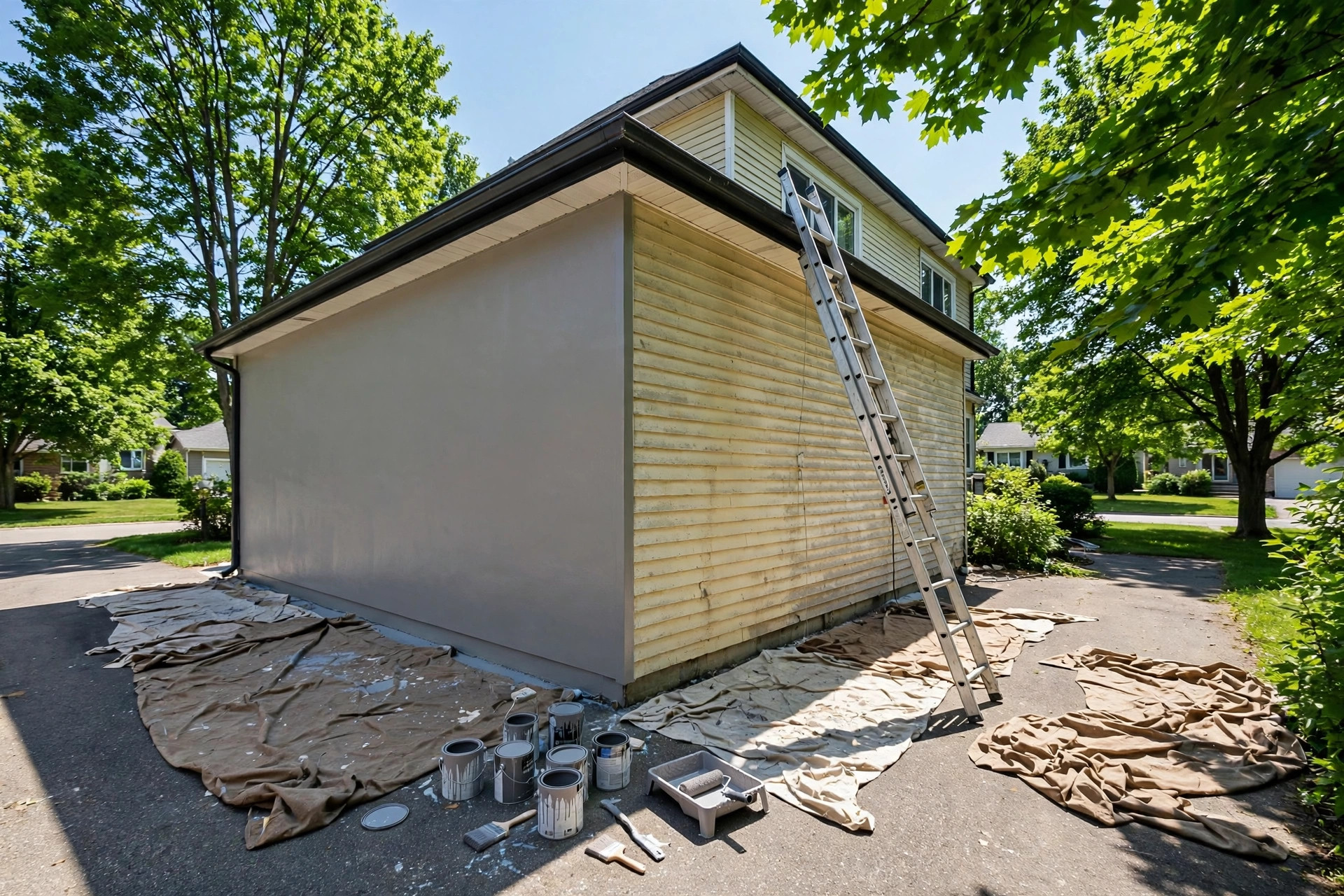
Ask me why an exterior paint job peeled two winters after it was done and I will rarely ask what paint they used. I will ask what week they painted. Paint is chemistry with a schedule: it has to go on a dry surface, flow out, and cure — harden all the way through, not just dry to the touch — before weather leans on it. Ontario's climate gives that chemistry a short season and a lot of ways to cheat it. Here is how the windows actually work, which is also most of what separates a painting job that lasts eight years from one that lasts two.
The temperature window is about the wall, not the air
Quality exterior paints want the surface and the air roughly between 10°C and 30°C — and the number that matters is the surface. A south-facing wall in full sun can be fifteen degrees hotter than the air, cooking paint so it skins over before it bonds. A shaded north wall can be below the minimum on a day that feels fine in a t-shirt.
That is why the real season in Simcoe County runs from about late May to late September, and why the good days inside it still have hours that do not work: the first coat waits until the morning dew is off and the wall is truly dry, and the last coat has to be on early enough to set before the evening temperature falls off a cliff. Spring and fall painting is a game of short days and borrowed afternoons.
The 48 hours after the coat
Fresh paint is most vulnerable right after it goes on. Rain inside the first day can surfactant-leach a latex coat — streaks and shiny runs that sometimes wash out and sometimes do not. A hard dew or frost on the first night can kill the cure entirely: the film never knits together, and it will chalk, crack, and peel on schedule the following winter, no matter how good the prep was.
So the forecast a painter reads is not the painting day — it is the two days after. Two dry, mild days in the bank is the real green light. One beautiful day followed by a cold front is a trap, and it catches a lot of June enthusiasm.
Humidity and the wet-wood problem
Wood has to be dry, not just dry-looking. After a stretch of rain, siding and trim can hold moisture for days after the surface feels fine, and paint over wet wood is paint over a future blister: the sun heats the wall, the moisture turns to vapour, and the vapour pushes the film off from behind. This is why the prep-is-the-paint-job rule exists — we have written about exterior painting prep before — and moisture is the part of prep nobody can see. A moisture meter reading is the difference between knowing and hoping.
What rushing it actually costs
Peeling by spring is the visible cost. The real cost is the redo: a failed coat does not come off politely. It has to be scraped, sanded, and spot-primed back to sound paint before a new coat goes on, which means the rushed job gets paid for twice — once to put it on wrong, once to take it off and put it on right. The labour of painting a house is mostly prep and removal. The paint itself is the cheap part, and the calendar is the cheapest part of all: waiting a week costs nothing.
The practical rules we paint by
- Nothing goes on a wall that is not dry to the meter, however nice the day looks.
- Start after the dew is gone; stop early enough that the last coat sets before the evening drop.
- No coat without two decent days behind it in the forecast.
- Shade side and sun side get painted at different hours — chase the conditions, not the clock.
- When the window closes, it closes. A half-finished elevation, properly stopped at a corner or a trim break, beats a rushed full side every time.
If your siding is chalking, peeling at the south and west faces first, or showing bare wood, the season to deal with it is this one — booked while the windows are still bookable. Book a free estimate at calendly.com/conceptsinc/construction-estimate-service or call (705) 330-2911, and we will give you a straight read on whether your house needs paint this year or can honestly wait for the next.